Vendor risk management solution
Third-party risk doesn’t stand still. Now, you can keep up as risks change.

Nudge Security delivers risk insights for every SaaS/AI vendor, today.
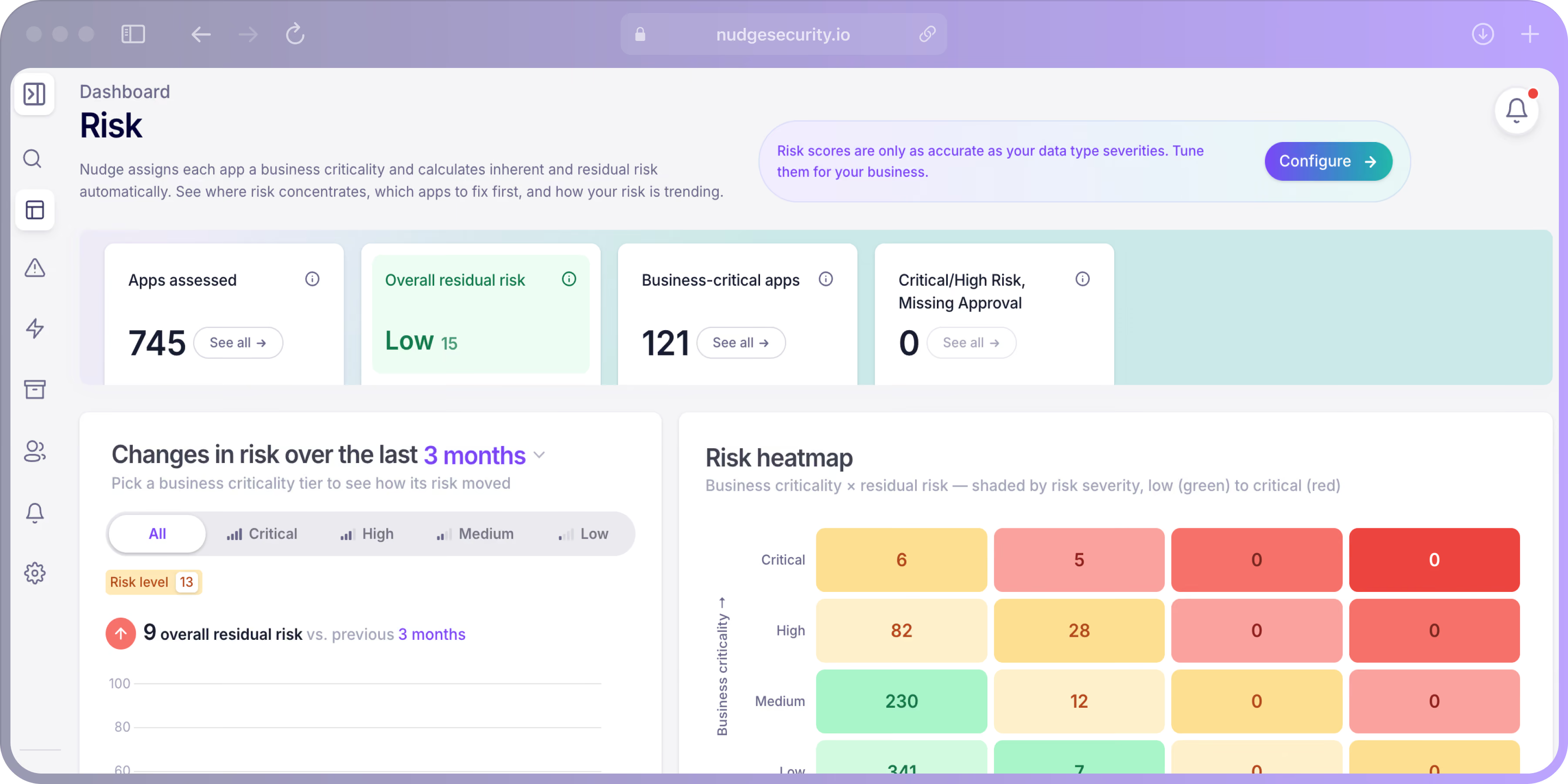


Nudge Security delivers risk insights for every SaaS/AI vendor, today.
Nudge Security delivers risk insights for every SaaS/AI vendor, today.




Gain visibility and control of vendor risk across your SaaS and AI ecosystem.



Why modern security teams ❤️ Nudge Security


Common questions about how Nudge Security makes third-party risk management easier.

Most customers find that the speed, breadth, and depth of insights that Nudge Security provides, including vendor security profiles, breach alerts, supply chain mapping, and adaptive risk management are superior to competitors. Additionally, Nudge Security offers policy-based automation and nudging to scale governance and make security a natural part of how work gets done.
Refer to these resources for more detail on how we compare to other solutions:
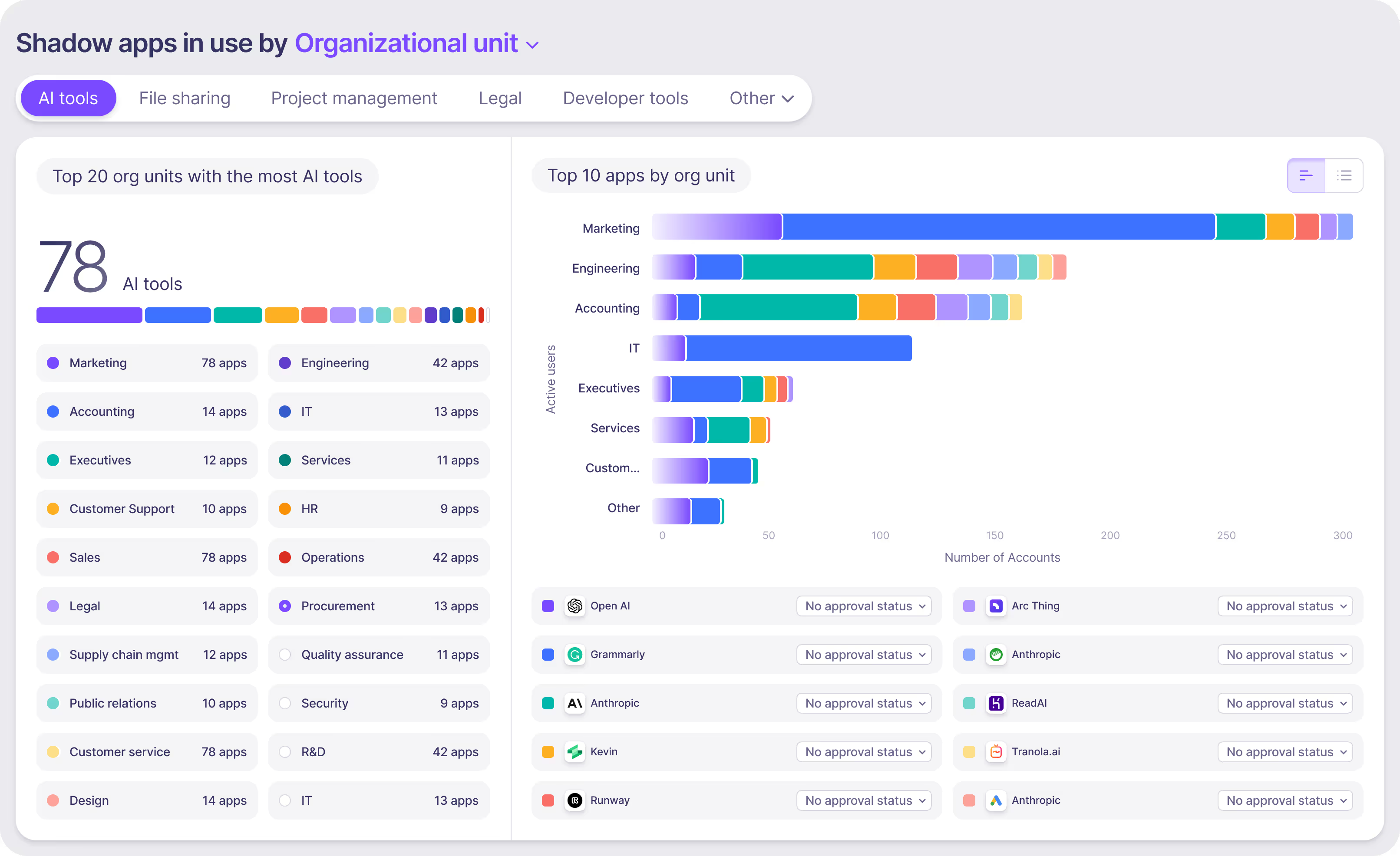
Nudge Security offers multiple options for security interventions (we call them “nudges”), calibrated to the degree of risk. When it comes to preventing the use of unauthorized applications, the most common approach is to set up automated nudges that will display in the user’s browser (via our browser extension) to redirect them to a similar, approved tool. Within that nudge, you can also give the user the option to request an exception and provide context on why they need to use that specific app. Our research shows that providing options for employees rather than hard blocks increases policy compliance, improves security fluency, and reduces the urge for employees to find ways to go around your security controls.
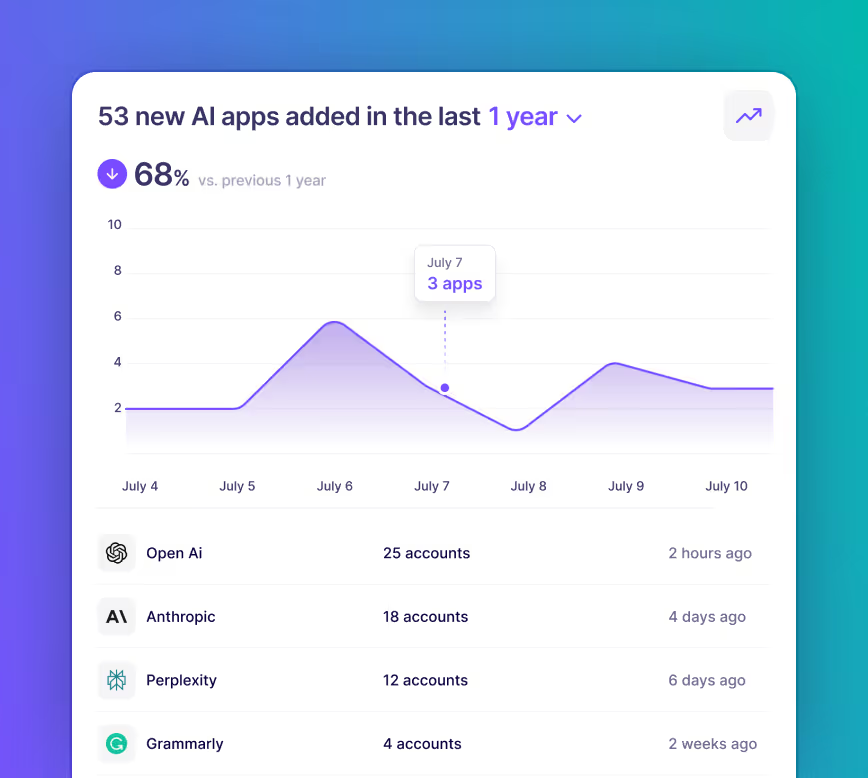
Fast. Most organizations have a complete SaaS and AI inventory in under two hours after starting a free trial and enabling the Google Workspace or Microsoft 365 integration. The inventory covers apps, accounts, OAuth grants, and even spend pulled from emailed invoices. From there, Nudge Security keeps scanning as new emails arrive, so your inventory is updated as soon as new apps show up. And, you can configure alerts and workflows to trigger immediate notifications and actions when new apps or accounts are introduced.
Each app’s Risk tab lists the control gaps driving its score, such as missing SSO or a risky OAuth grant. They’re sorted by how much each one would lower residual risk, and many can be acted on directly from Nudge Security.
Additionally, you can send automated, policy-based messages (nudges) that ask the person responsible for a risk to fix it. Examples include removing an OAuth grant, using MFA, deleting an unused account, or switching to an approved app.
Nudge Security also includes agents that analyze OAuth grants and browser extensions, return a verdict on whether it should be removed, investigated further, or marked as approved. The agents only take the actions you authorize so you maintain visibility and control at all times.
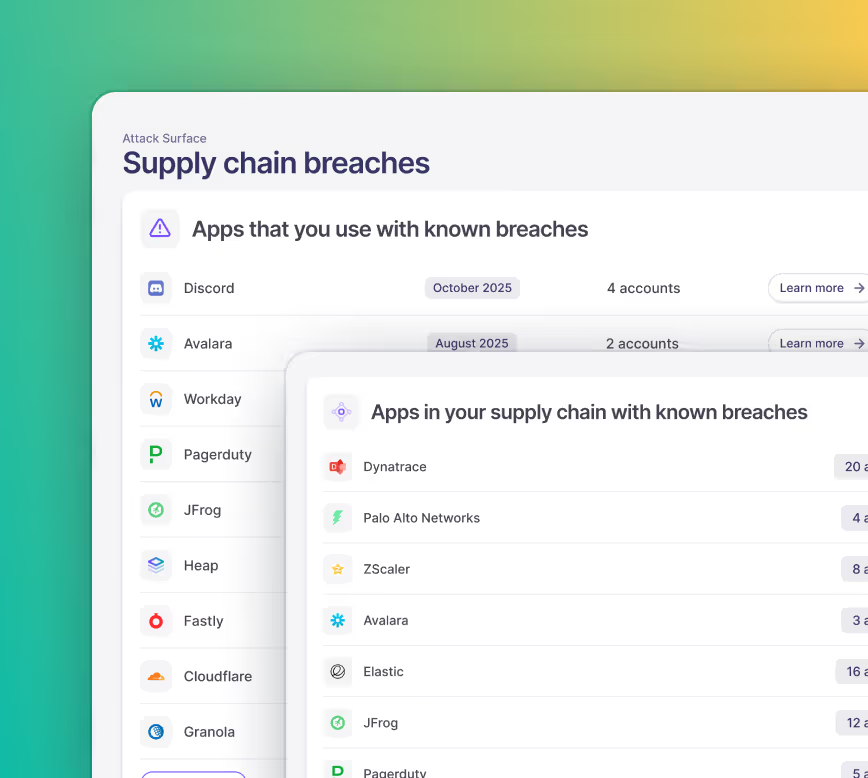
And, when a third-party or fourth-party vendor is breached, Nudge sends you an alert with breach details, recommended actions and a list of affected users which your team can use that list to start communications or password resets.
Nudge Security gives you the oversight and automation you need to manage third party risk at scale.
Nudge Security has built a proprietary database of over 250,000 vendor security profiles, providing security program details, breach histories, and compliance attestations for each vendor discovered. The security profile provides 90% of the information typically needed for a vendor security review, all in one place, so your team can avoid the hassle of gathering vendor details manually.
Nudge Security is built with privacy and security at its core. It typically requires read-only access to accounts, analyzes data in memory, and only stores metadata necessary for reporting and governance. Sensitive content, such as emails or documents, is not retained, and every action is auditable. This ensures organizations can gain visibility into third party risk while maintaining compliance with internal privacy policies and external regulations. To learn more about how we limit and safeguard our access to your email account, visit our Trust & Security page.
Nudge Security decides an app’s business criticality based on how widely the app is used across your organization as well as the sensitivity of data the app handles. Nudge’s proprietary model deduces likely data types based on the purpose of the app (i.e. CRM, financial forecasting, HR, etc.), without you having to manually assign them individually. There are 29 data types that Nudge uses to assign a business criticality rating, and each data type is assigned a sensitivity level. Each app is rated Low, Medium, High or Critical based on the highest-sensitivity data it handles. You can change the data sensitivity levels at any time to match your own data governance rules.
Nudge Security scores each SaaS and AI vendor based on inherent risk (the risk before any of your compensating controls are counted) and residual risk (the risk after considering the controls you have in place).
Both scores come from more than 30 factors across these three categories:
Scores recalculate automatically when any of these factors change, for example when a new MCP server is connected or a vendor discloses a breach. Each app’s Risk tab shows what’s driving its score, plus recommended fixes ranked by how much each would lower residual risk.
You can start a free trial immediately, no credit card requires, and discover all SaaS/AI apps in use across your environment today. Deployment is fast, requiring minimal configuration, and Nudge begins producing insights immediately. Typically within 2 hours, you’ll have a full inventory of all SaaS/AI apps and user accounts, and vendor risk scores based on more then 30 factors described above. From there, you can automate governance workflows, remediate third party risks, and integrate oversight into existing IT and security processes. Nudge Security helps modern teams make security a natural part of how work gets done rather than an obstacle to innovation.