


Adaptive Risk Management

Your third-party risks evolve. Your TPRM should too.

Instantly prioritize apps by criticality as soon as they’re introduced.
Always-on app risk scores recalculate as internal & external risks change.
Adapt security decisions & controls dynamically as your posture evolves.

Manage third-party SaaS & AI risk without vendor input or manual data entry.

Trusted by security teams everywhere

Your TPRM program can’t keep pace with changing SaaS and AI risks. Attackers know it.

Third-party breaches at Vercel, Salesloft Drift, and LastPass reveal that an app’s connections to your own environment matter just as much as a vendor’s external security posture. Employees constantly connect apps to other systems, share sensitive data, and grant new access, creating an evolving risk surface that’s hard for security teams to monitor—and easy for attackers to exploit.

48%

of all breaches involve a third-party
Source: Verizon

>60%

of apps skip TPRM
Source: Nudge Security

88

average OAuth grants per employee
Source: Nudge Security

Respond to dynamic SaaS & AI risks.

Instant prioritization

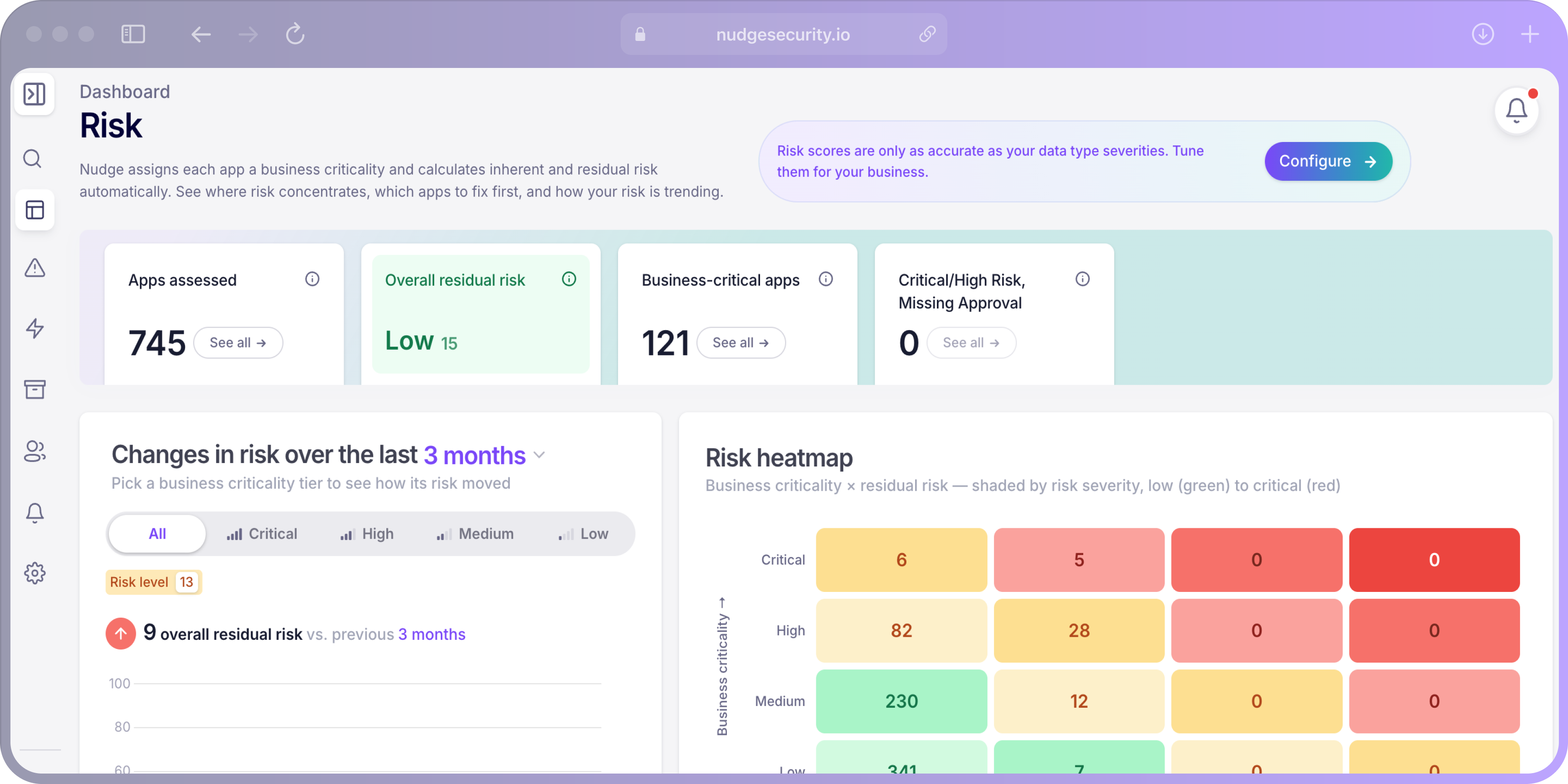
Discover and auto-triage SaaS and AI apps by criticality as soon as they’re introduced, so you always know what’s in your environment—and where you should focus.
Always-on risk scores
Continuously recalculate risk without vendor cooperation, manual data entry, or prior knowledge that an app is in use.

Adaptive controls

Adjust security decisions and controls dynamically as vendor risk, app configurations, data access, and identity relationships change.

01

Triage

Inventory and triage your SaaS and AI on Day One with patented, perimeterless SaaS and AI discovery across multiple vantage points (workspace provider, browser, and connected apps).

Continuously inventory apps, instances, app owners, account holders, integrations, AI agents, browser extensions, and spend.
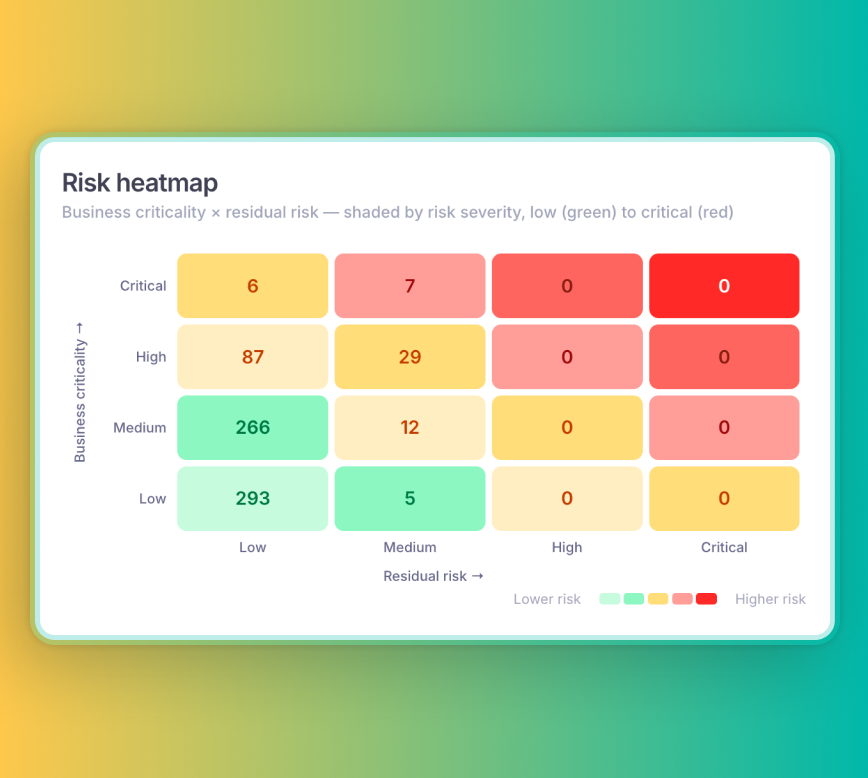
Automatically tier apps by business criticality (critical, high, med, low) based on 29+ inferred data types.
Detect OAuth grants, API keys, AI agents, service accounts, and other non-human identities.
Surface risky app-to-app integrations, MCP servers, and other emerging AI connections.
Nudge Security SaaS asset discovery

02

Monitor

Stay on top of risk across your SaaS and AI estate using proprietary risk intelligence, internal business context, security posture checks, and agentic AI.

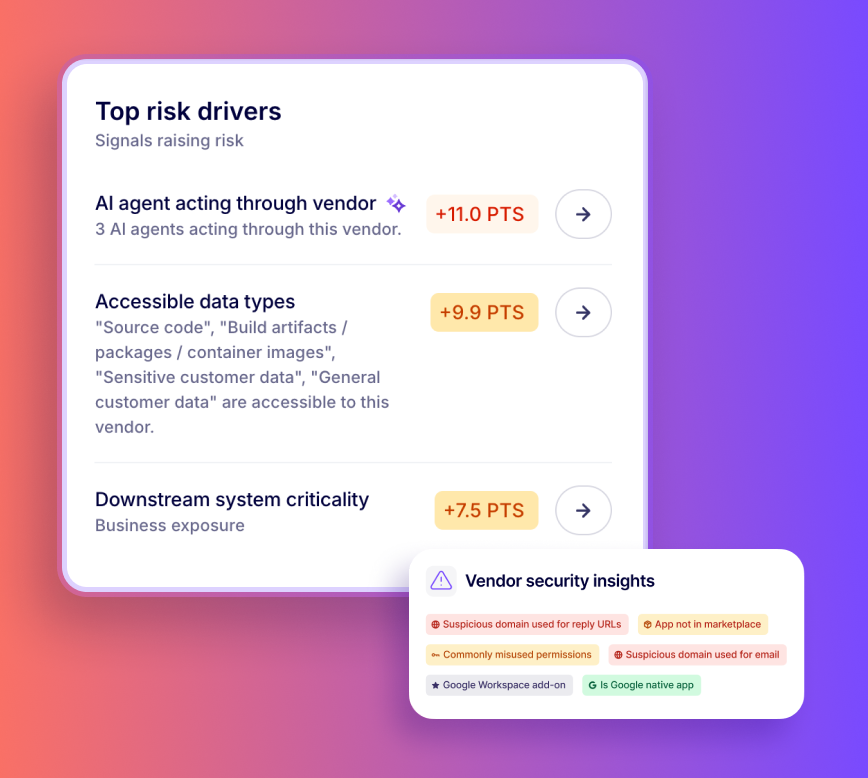
Continually recalculate app risk scores based on 30+ internal and external factors.
Draw insights from 250K vendor security profiles, with 3rd- and 4th-party breach alerts.
Monitor SaaS, AI, and agentic security posture risks and misconfigurations.
Detect identity risks such as unused, shared, or weakly protected accounts.
AI agents analyze OAuth grant and browser extension risk as it emerges.

03

Govern

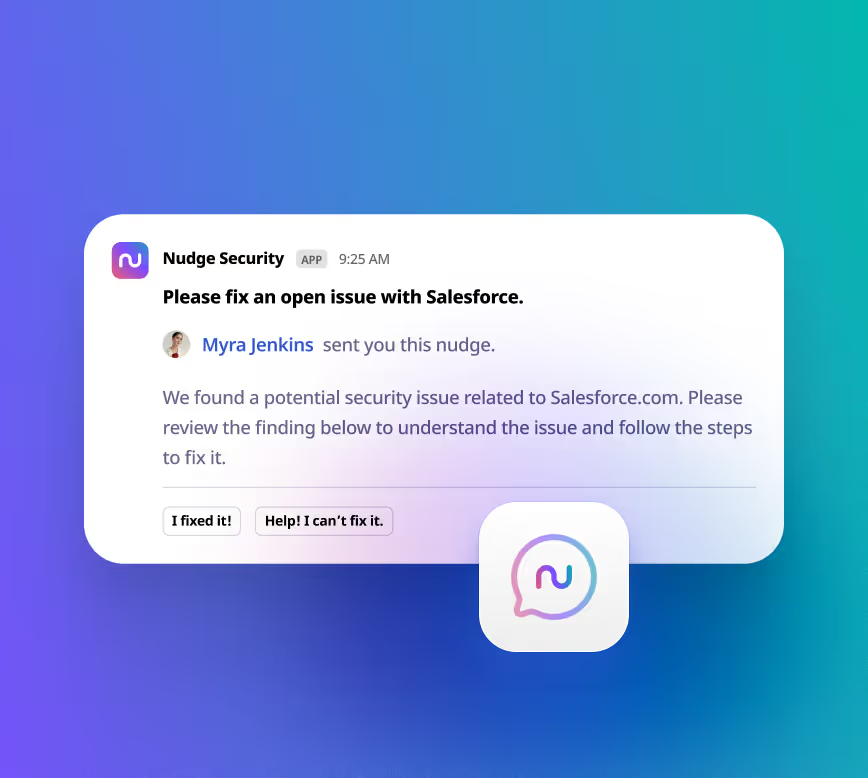
Policy automation centers on risk-calibrated interventions that deliver policy and context to the right person at the right moment, in the browser, Slack, and Teams.

Risk recommendations, native security controls, policies, and agentic AI to reduce risk.
Enforce policies in-browser in real time.
Drive employees to use approved, trusted vendors.
Audit and revoke risky SaaS-to-AI data integrations.
This is the default text value
Nudge account or agent creators to confirm intent and remediate risky agent configurations.
Nudge Security SaaS asset discovery

04

Remediate

Agentic AI and automated remediation workflows continually reduce risk at scale with security oversight and auditable reporting.

Route issues to the right app owners, admins, or users.
Deliver step-by-step remediation guidance and context.
Support human judgment where automation falls short.
Scale remediation across every SaaS and AI app.

How Wallace Plese + Dreher reeled in third-party risk.

160+ hours of SaaS discovery, risk assessment, and response activities completed in just 6 hours
42 app integrations discovered and evaluated with OAuth risk scores
90% more efficient security reviews for new SaaS and AI vendors
“Nudge has paid for itself in the time that it has given me back. And to be frank, I wouldn't have found a lot of the things that Nudge identified—things like supply chain breaches that companies often keep quiet about.”
Ronald J. Llewellyn III
Manager of Information Technology, Wallace Plese + Dreher
Read the full story

Keep third-party SaaS & AI risk visible, prioritized, and under control.

without
Logo
❌

Risk is assessed during vendor procurement and treated as static, even as vendor posture, app usage, and access change.

❌

Security teams lack visibility into shadow SaaS and AI, leaving many apps, integrations, and non-human identities outside risk-management processes.

❌

Generic vendor scores are disconnected from internal context such as data sensitivity, authentication, OAuth grants, configurations, and compensating controls.

❌

Teams manually investigate changing risks and struggle to determine which apps and control gaps require attention first.

❌

Mitigating controls lag behind evolving risks, allowing new integrations, broader access, and changing app criticality to create unaddressed exposure.

with
Logo

SaaS and AI apps are continuously discovered and auto-tiered by criticality based on the scope of organizational adoption and the sensitivity of inferred data types.

Dynamic app risk scores combine vendor, supply-chain, and breach intelligence with each app’s internal usage, access, identity, integration, and control context.

Specific control gaps are continuously surfaced and ranked by their potential impact, showing security teams what to fix first.

Findings, remediation workflows, and recommended controls adapt as an app’s risk posture changes.

Policy-driven nudges and guided workflows engage the right app owner, administrator, or user to reduce risk at scale while preserving human oversight.⁠

Frequently asked questions

Common questions about Nudge Security's AI security governance solution

What is adaptive risk management?

Adaptive risk management continuously adjusts how you prioritize and respond to third-party SaaS and AI risk as vendor posture, app usage, access, configurations, and connections change. Instead of treating risk as a one-time assessment, it keeps decisions and controls aligned with your current environment.

How does Nudge Security discover SaaS and AI apps?

Nudge Security discovers SaaS and AI across multiple vantage points, including workspace providers, browsers, and connected apps. It continuously inventories apps, instances, owners, users, integrations, AI agents, browser extensions, and spend.

How does Nudge Security prioritize apps by criticality?

Nudge Security automatically tiers apps as critical, high, medium, or low based on organizational adoption and 29+ inferred data types. This helps security teams focus first on the apps that matter most to the business.

What factors influence an app’s risk score?

App risk scores continuously combine 30+ internal and external factors, including vendor and breach intelligence, business criticality, data access, identity relationships, integrations, security configurations, and compensating controls.

Does Nudge Security require vendor participation or manual data entry?

No. Nudge Security can discover, prioritize, and continuously recalculate app risk without vendor cooperation, manual data entry, or prior knowledge that an app is in use.

How does Nudge Security help teams respond when risk changes?

Nudge Security ranks control gaps by potential impact, recommends risk-calibrated actions, and routes remediation to the right app owner, administrator, or user. Policy-driven nudges and guided workflows help teams reduce risk at scale while preserving human oversight.

Can Nudge Security manage risks from AI agents and other non-human identities?

Yes. Nudge Security discovers AI agents, OAuth grants, API keys, service accounts, MCP servers, browser extensions, and other emerging connections. It also surfaces risky configurations and can prompt account or agent creators to confirm intent and remediate issues.

Start responding to risk as it evolves.