Uncover two years of historical SaaS spend



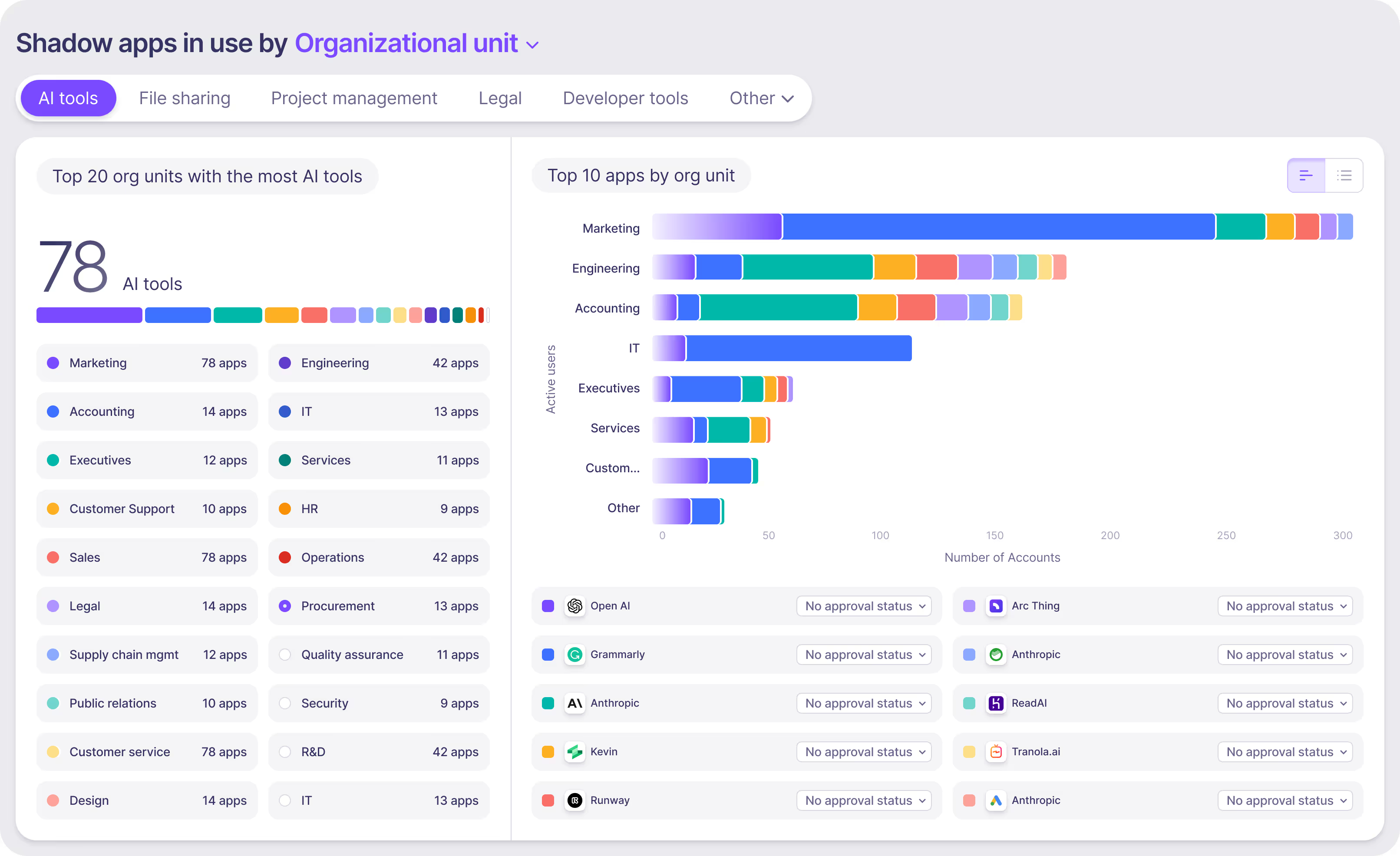
Secure apps, accounts, and integrations introduced with or without IT approval.
One lightweight integration into Google Workspace or Microsoft 365 unlocks your complete inventory, even accounts created in the past.

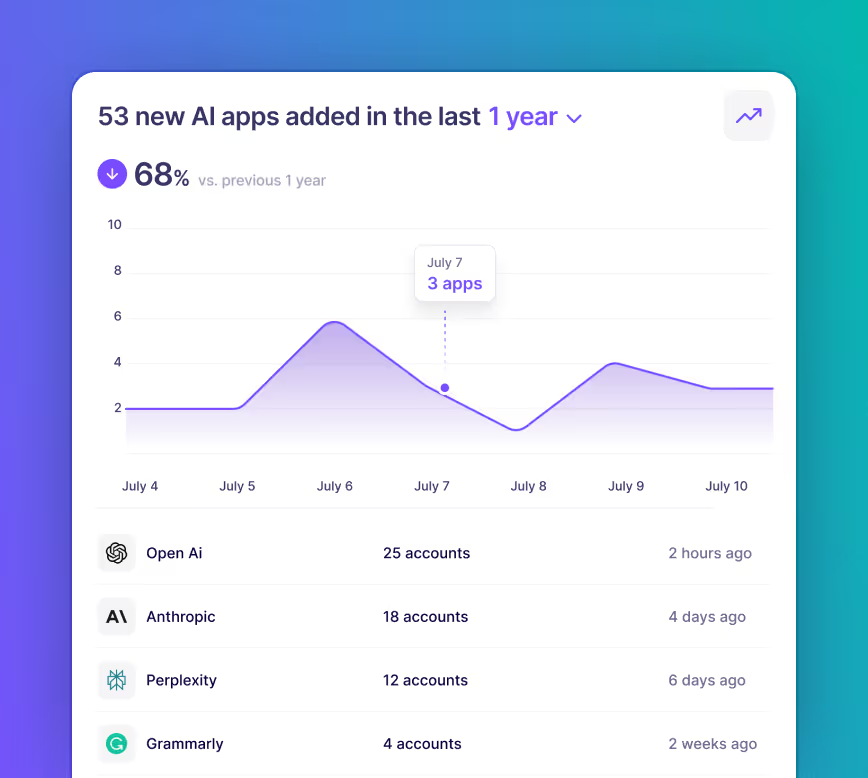
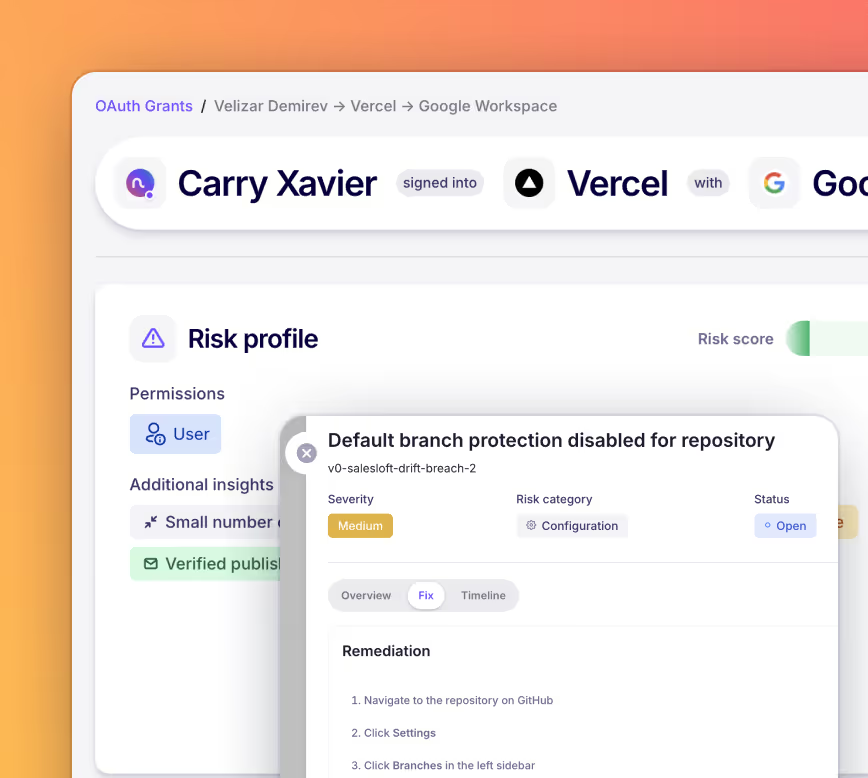
Powerful risk intelligence, agentic analysis, and automation turn discovery into action without burying your team in tedious tasks.
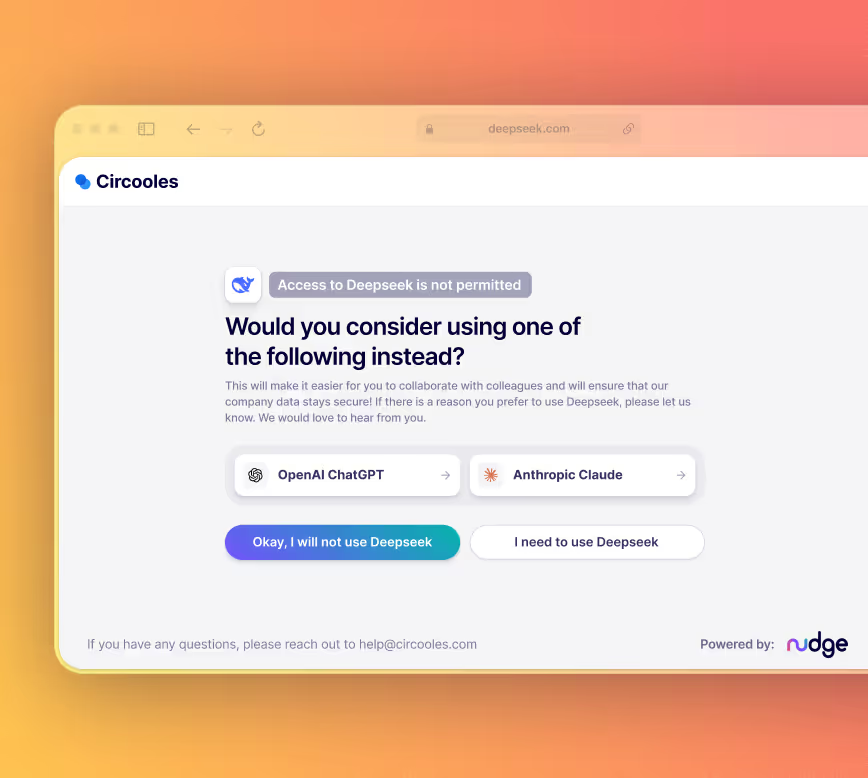
Hard blocks drive risk further in the shadows. Nudging allows interventions to be calibrated to the risk and engages the workforce at the moment they can take action rather than in a stale security training.Nudge Security also discovers and analyzes spend data, making it easy to forecast and plan for growth while identifying wasted Salesforce licenses that are unused or underutilized.
Customers ❤️ Nudge Security


Common questions about Nudge Security's shadow IT solution

Fast. Most organizations have a complete SaaS and AI inventory in under two hours after starting a free trial and enabling the Google Workspace or Microsoft 365 integration. The inventory covers apps, accounts, OAuth grants, and even spend pulled from emailed invoices. From there, Nudge Security keeps scanning as new emails arrive, so your inventory is updated as soon as new apps show up. And, you can configure alerts and workflows to trigger immediate notifications and actions when new apps or accounts are introduced.
Nudge Security uses a layered approach to discover shadow IT, starting with email-based discovery that works via a lightweight integration into your organization’s email provider (Microsoft 365 or Google Workspace) and analyzes emails received from SaaS and AI providers to identify account creation and other activity related to technology use. From there, you can deploy our browser extension to gain deeper, real-time insights into frequency of SaaS and AI use, file upload activity, password hygiene, and more. Nudge Security also offers API integrations into your business critical SaaS apps so you can surface and resolve misconfigurations, risky integrations, and other security posture gaps.
Nudge Security controls shadow IT by working with employees instead of blocking them.
When an employee signs up for a new app, connects a risky integration, or skips MFA, you can reach them with a nudge in that moment via the browser, Slack, Microsoft Teams, or email to guide them to secure choices. Nudge templates are pre-built based on behavioral psychology with the ability to customize them as needed. In one click, employees can explain why they need an app, confirm if they still need access, enable MFA, switch to an approved alternative, or revoke a risky integration. By engaging employees to fix the issue themselves, your security team can scale governance without adding to the ticket queue.
The result: employees are 2x more likely to respond to a nudge than to comply with a security block. Your team spends less time chasing people and controls risk with less effort and less friction for the business.
Most customers find that the speed, breadth, and depth of insights that Nudge Security provides, including vendor security profiles, breach alerts, supply chain mapping, and spend analysis are superior to competitors. Additionally, Nudge Security offers policy-based automation and nudging to scale governance and make security a natural part of how work gets done.
Refer to these resources for more detail on how we compare to other shadow IT solutions:
Many only scan email subject lines, which misses a lot. Nudge Security analyzes the full metadata of machine-generated emails and uses pattern recognition—not just a list of known senders—to identify SaaS and AI providers. That means we can surface shadow accounts, email/password logins that never touch SSO, and brand-new tools (including AI apps) that haven't been added to anyone's catalog yet.
Getting started is straightforward. Organizations can sign up for a trial to begin discovering all SaaS apps in use across the environment. Deployment is fast, requiring minimal configuration, and Nudge begins producing insights immediately. From there, teams can automate governance workflows, remediate risky applications, and integrate shadow IT oversight into existing IT and security processes. This allows organizations to secure their technology landscape without disrupting ongoing productivity.