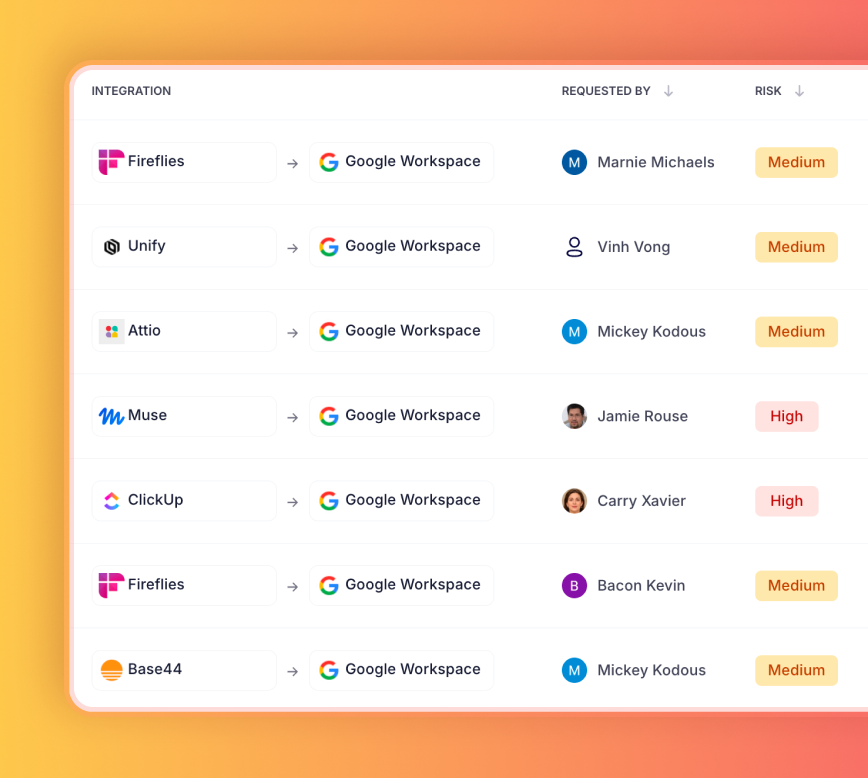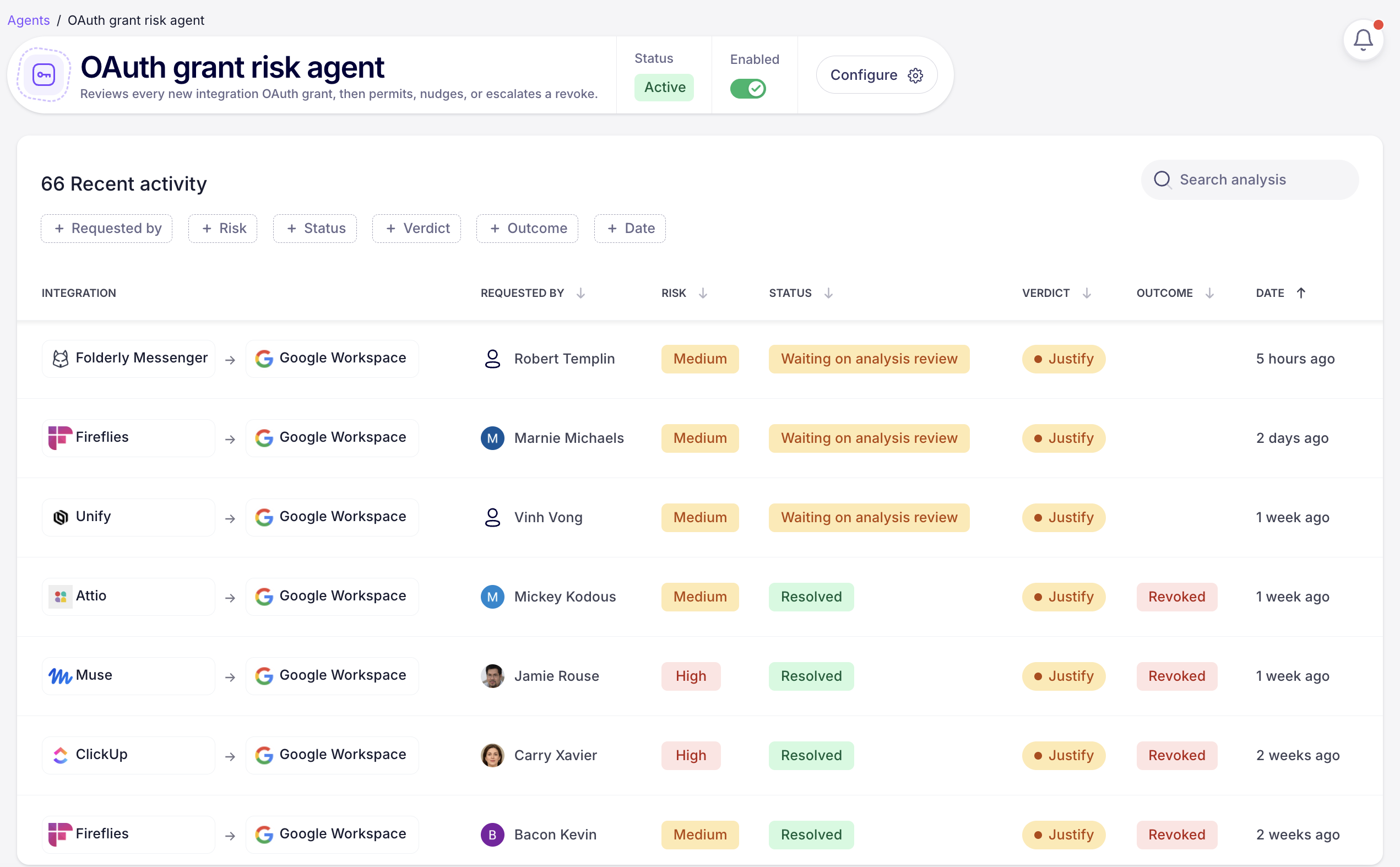



Nudge Security AI agents continuously analyze SaaS and third-party AI risk across your workforce—then carry out the actions your team authorizes. Reduce the manual review burden across OAuth grants, browser extensions, and new vendors while maintaining security oversight.

AI agents work continuously and in parallel, so your team is no longer forced to choose which queue gets attention first. They can analyze high-volume risk surfaces, resolve what’s clearly safe, and keep human review focused on decisions that matter.


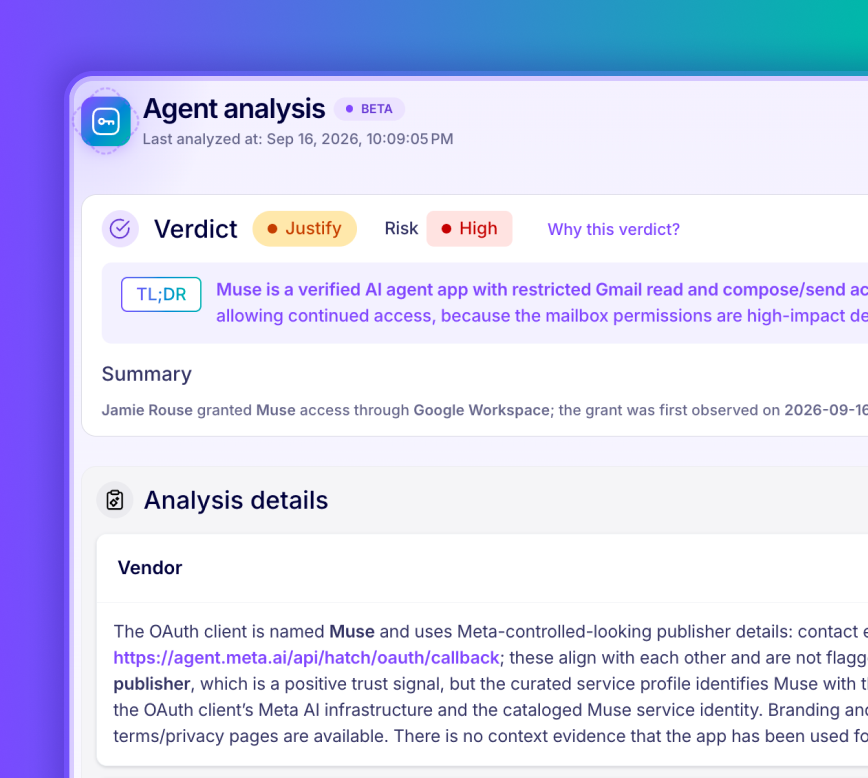
Nudge Security AI Agents do more than summarize records. They evaluate the evidence, explain the risk, identify what they could not confirm, and show the signals that shaped the verdict.
Observe mode is on by default, giving your team a low-risk way to compare agent verdicts against how you would have handled the same work manually. Your team gives each agent authority only for the actions you approve.

Common questions about Nudge Security's AI Agents
Only within authority your team has granted. Observe mode is on by default, so agents analyze and record verdicts without taking action at first. After you verify performance, you can configure what each agent may do, action by action. Consequential actions go to your team for approval, and the agent carries out what you authorize.
Observe mode lets the agent run on your real environment and show every verdict and the action it would have taken, without taking that action. It’s a verification step, not the end state: once your team is confident in the agent’s calls, you can authorize specific actions.
Nudge Security AI Agents work from context most tools don’t have: discovery across the browser, inbox, identity provider, and connected apps. They reach risk surfaces others miss, like OAuth grants and browser extensions, and they do more than produce a score. They return a verdict and, when authorized, carry out the next step.
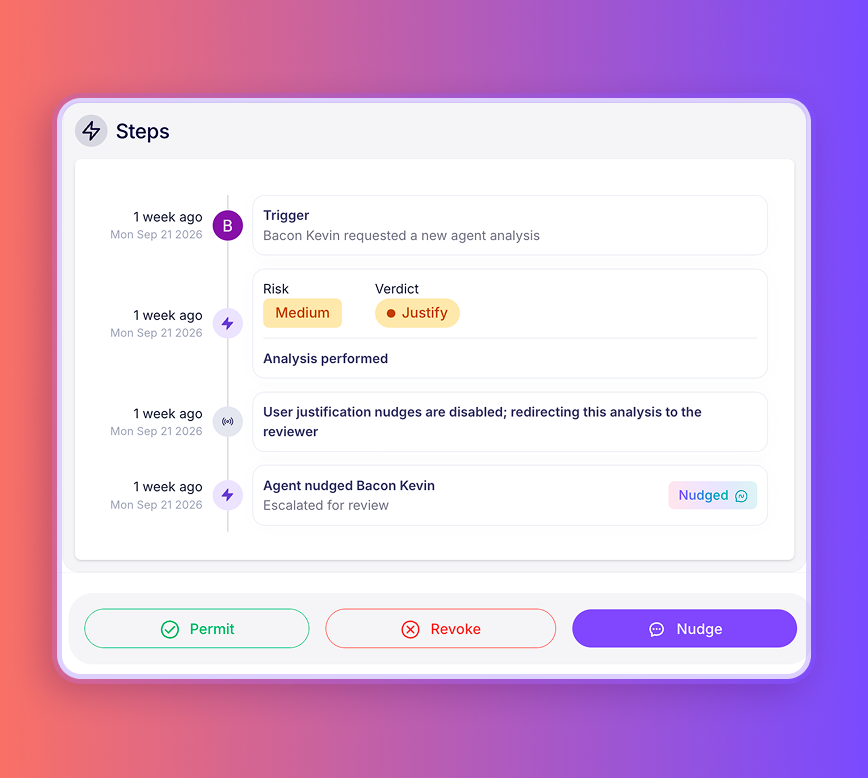
Depending on the agent and the authority you configure, Nudge Security AI Agents can revoke OAuth grants, disable browser extensions, permit or resolve what’s safe, send nudges to employees for justification or added context, and record the outcome for auditability.
A person authorizes every consequential action. Clearly safe verdicts can resolve without human review, which is how agents reduce the queue instead of simply adding another layer of analysis.
Start in observe mode, review the agent’s verdicts against what your team would have decided, and then authorize only the actions you’re comfortable with. Every verdict includes reasoning, evidence gaps, and an audit trail so teams can verify how the agent reached its call.